
OUR TAKE · Trade Policy and Procurement
USTR's tariff proposal needs a separate landed-cost scenario
USTR has proposed Section 301 action covering 14 economies. Procurement teams need to map the proposal to products before changing shipment or supplier decisions.

Illustrative stock photograph of cost calculations using a calculator and documents; not a USTR document. Photo: Pavel Danilyuk / Pexels · Pexels License.
A tariff announcement can change a purchasing conversation before it changes the duty payable on a shipment. The danger for an importer is allowing a proposed rate to enter the operating budget as if its scope, timing and interaction with existing charges were already settled.
On November 25, the Office of the US Trade Representative announced determinations and proposed responsive action in investigations covering 14 economies. The investigations concern structural excess capacity and production in manufacturing. USTR describes the practices as actionable under Section 301 and has proposed additional tariffs for public comment. Its announcement includes China, the EU, India, Japan and Vietnam among the affected economies; it says no determinations have been made on Mexico or Norway at this time.
USTR sets January 5, 2027 as the deadline for written comments and schedules hearings from January 25.
For procurement, that is enough to start a serious exposure review. It is not enough to apply one headline percentage to every purchase order from an affected country.
Start with the product, then the proposed treatment
USTR's announcement links economy-specific notices and identifies exemptions for certain products. Proposed treatment also accounts for existing trade actions. Wiley's November 25 analysis likewise describes proposed actions following the findings, rather than a single uniform tariff on every covered origin.
A useful exposure file therefore begins with the imported product, its classification and its documented origin. Beside those fields belong the relevant proposed notice, any apparent exclusion and the duty treatment already used for the shipment. The customs specialist can then determine which parts of the proposal could matter to that product.
That sequence matters commercially. Applying a country headline first and researching exclusions later can exaggerate exposure. Ignoring the proposal because it is not final can leave the business unable to respond when a decision arrives. A product-level file gives the buyer something usable between those extremes.
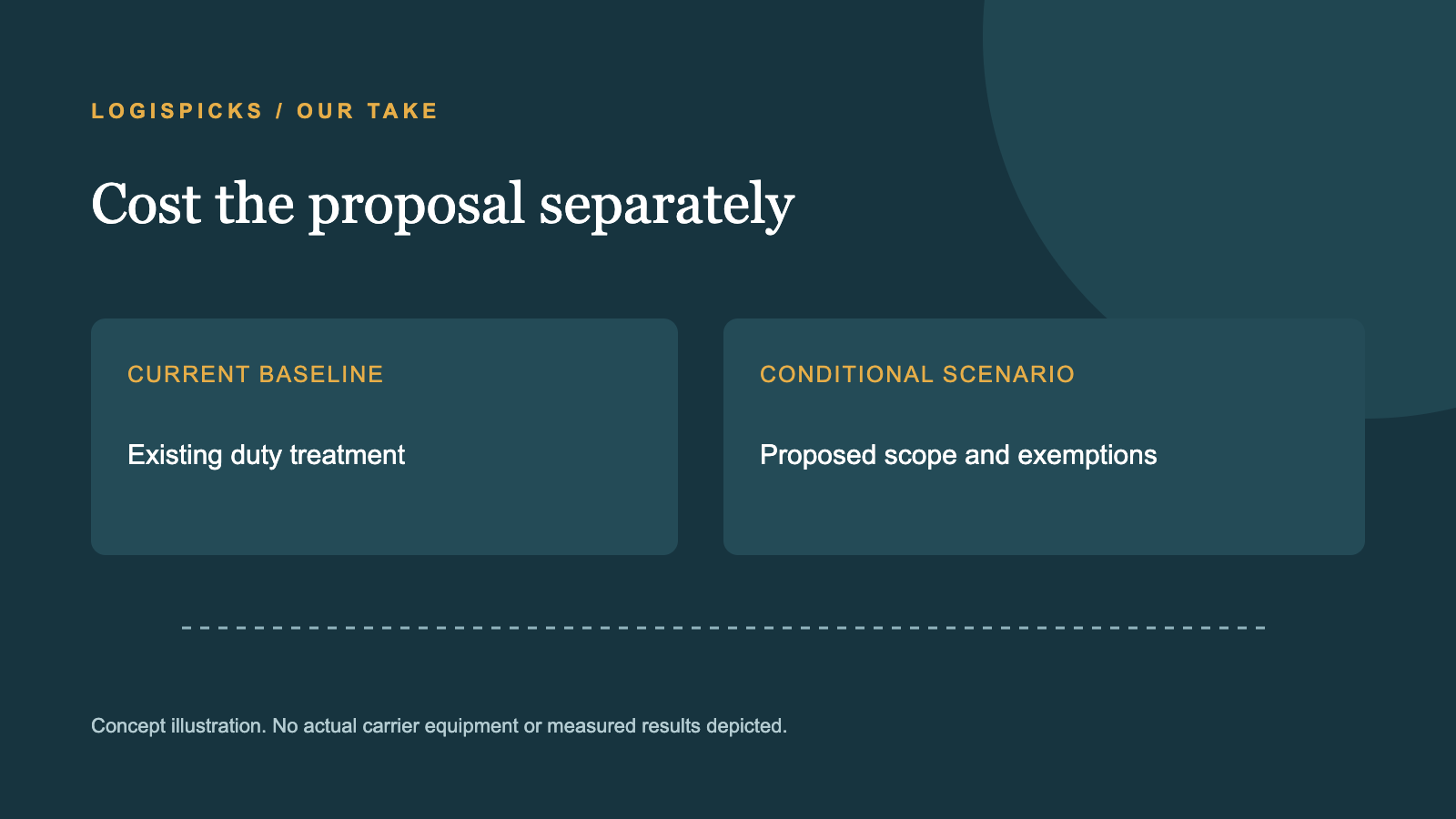
The calculation should remain visibly separate from the current landed-cost baseline. For each affected order, show the cost under the treatment currently applicable and a conditional scenario under the proposal. State which scope or implementation questions remain unresolved. Do not silently replace the baseline with the scenario.
Freight acceleration has to earn its premium
The announcement can prompt a rush to bring cargo forward. Before paying for faster transport, the buyer needs to know what event would determine exposure under any final action and whether the proposed shipment change could actually affect that event. Those questions require the final terms and shipment-specific customs advice; a faster sailing or flight is not, on its own, evidence of an avoided charge.
There is also a straightforward inventory calculation. Earlier arrival can increase storage, financing and receiving requirements. A premium air movement may be worthwhile for a production-critical component while being difficult to justify for slow-moving stock. The proposal does not make every order equally urgent.
Procurement and logistics should price those choices together. The decision record needs the transport premium, the change in inventory timing and the tariff assumption being tested. If the assumption cannot yet be established, the business should be able to see that uncertainty rather than bury it inside a claimed saving.
A different supplier is a different operating plan
An alternate source may change production lead time, minimum order quantities, quality approval, origin evidence and the route into the receiving plant. A cheaper tariff scenario cannot answer those questions for the buyer.
The immediate value of the November 25 development is a more focused conversation with suppliers and customs advisers: which products could be affected, which alternatives are technically approved, and how much usable flexibility the business has before committing its next order. Supplier quotations should state their validity and the assumptions behind any tariff-related adjustment.