
OUR TAKE · Ocean Freight and Supply Chain Strategy
Flat trade, longer voyages: the freight budget trap for 2027
UNCTAD's 2026 maritime review exposes the risks behind 2027 freight budgets: longer voyages, port delays, fuel exposure and limited routing alternatives.
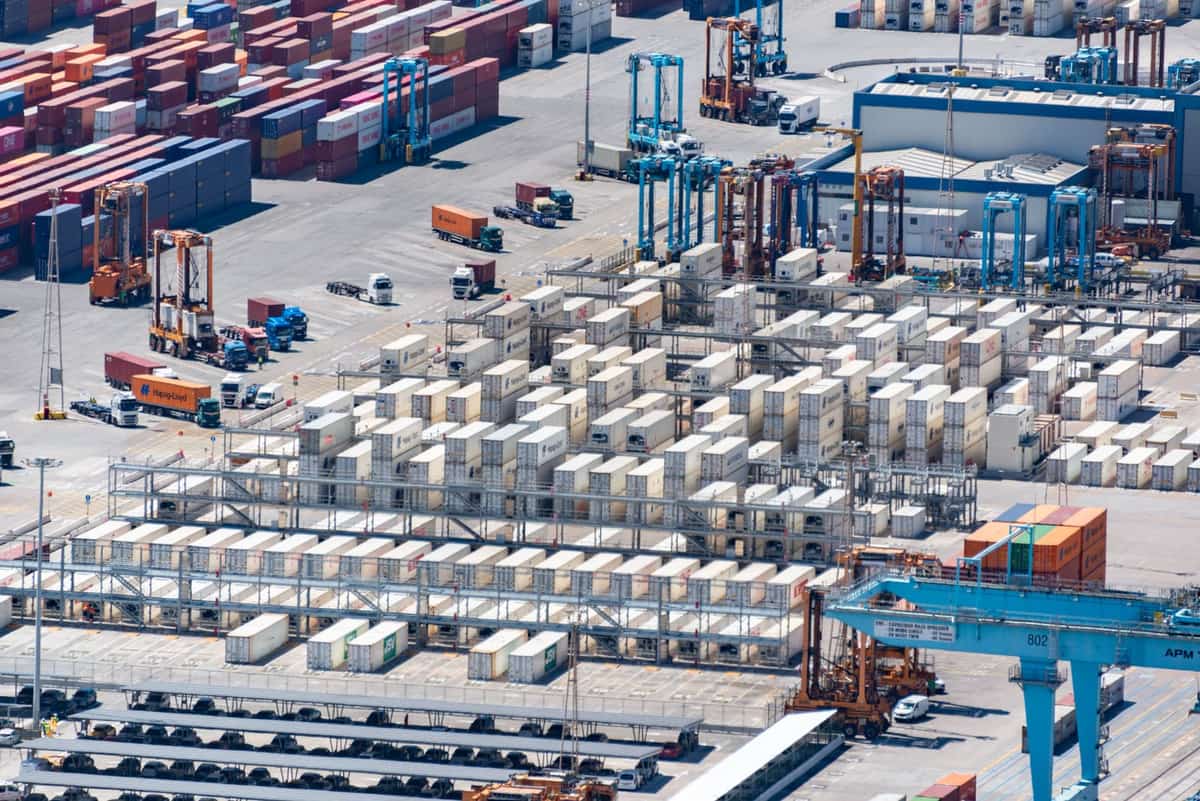
Illustrative port photograph, not a disruption pictured in the report. Photo: Diego F. Parra / Pexels. Photo source · Pexels License.
A freight budget can look prudent and still rest on a weak assumption: that slower global trade will leave enough spare shipping capacity to bring transport costs down. For a buyer signing next year's contracts, UNCTAD's latest maritime review is a reason to examine that assumption before turning it into a savings target.
The Review of Maritime Transport 2026, released on November 26, projects no growth in total seaborne trade volumes in 2026, but a 1.5% increase in ton-miles as cargo travels farther. Containerized trade is forecast to grow by 3.3%. These are projections for different measures, not contradictory accounts of the same market. The volume forecast assumes that conditions affecting passage through the Strait of Hormuz in the first half of 2026 broadly persist into the second half.
The distinction matters. A shipper purchases space on a service connecting particular places. The global volume forecast says little about how much usable space that service will offer, how long a round trip will take, or what happens when its route changes. Procurement can reasonably negotiate hard in a weak market. It cannot reasonably book an annual saving simply because total tonnes have stopped growing.
The useful response is a freight budget built around operating routes, with the cost of changing them visible. That requires more than adding a contingency percentage to last year's spend.
The same cargo can keep ships occupied for longer
Ton-miles combine cargo weight and distance. If the weight stays unchanged but the journey lengthens, the transport work increases. From the customer's side, the important consequence is time: a ship occupied on a longer rotation is unavailable for another departure during those extra days.
A November 16 working paper by Simon Fuchs, Fernando Leibovici and Woan Foong Wong, published by the Federal Reserve Bank of Dallas, models this mechanism explicitly. Longer rotations absorb vessel capacity; redeploying ships to compensate can change capacity elsewhere. The paper is preliminary research by its authors, not an official Federal Reserve forecast or a prediction of a particular freight rate.
For the annual tender, the route is part of the price specification. A quote based on a canal passage and one based on a longer routing may purchase different transit times and carry different exposure to route changes. Treating them as interchangeable can produce a saving on the tender sheet that operations cannot use.
A longer route does not justify any particular surcharge or guarantee high rates indefinitely. Competing capacity, demand and service changes still affect pricing. The seller needs to explain the charges and commitments attached to its actual offer.
An alternative needs to survive the same disruption
A second carrier is useful commercial competition. It is weaker protection against a route closure if both offers use the same passage, transshipment hub and destination gateway.
The Dallas Fed working paper makes a related distinction at the national level: exposure to a route does not by itself establish vulnerability. Available substitutes influence the loss when access changes. For a cargo owner, the practical extension is to examine what actually differs between the primary and alternative shipment plans.
That means following the cargo beyond the ocean leg. An alternative port may be accessible while its inland connection, customs arrangement or receiving capacity makes the proposed switch impractical for a particular shipment. An alternative supplier can also leave the buyer dependent on the same maritime connection.
These are not merely hypothetical constraints. In a May 28 WTO account of a meeting with shipping executives, industry representatives described capacity limits on alternative land routes and ports, alongside customs delays associated with multimodal movements. Those were industry observations reported by the WTO, not measurements proving that every alternative corridor is full today.
A routing comparison should expose shared dependencies before procurement pays for supposed diversification. For a critical purchase, the second offer needs to identify the point at which it becomes a genuinely different option and the conditions under which the seller can activate it.
There is a difference between having another destination on a presentation slide and holding a workable arrangement for cargo that is already packed, documented and waiting to move.
A faster sailing can still end in a queue
The report's port-performance chapter adds a distinction that an ocean-transit comparison can miss. By the end of 2025, container ships were waiting about twice as long for a berth in developing countries as in developed ones. This is a group average for vessel waiting, not the expected delay to a buyer's container at a named terminal.
A purchasing decision needs both measures. The advertised sailing time describes part of the journey; the consignee needs to know when the cargo can leave the terminal. Replacing a long voyage with a shorter voyage to a congested gateway can move the delay rather than remove it.
The receiving plan should therefore distinguish arrival at anchorage, berthing, discharge, customs release and collection. Each event has a different owner. An estimate for vessel arrival cannot be treated as a commitment that a truck will leave with the box that afternoon.
Border handovers matter just as much when a contingency introduces a land crossing. The alternative may require a transit procedure, a different party to lodge information or an arrangement for goods needing inspection. A port being open does not establish that those steps are ready for a diverted consignment.
For a critical flow, a trial shipment can expose these gaps before the alternative is needed at scale. The useful result is an actual sequence of handovers and documents, with the unresolved steps identified. A successful small trial still does not prove spare capacity for the full diverted volume.
Put the delay into the budget without exaggerating it
The freight invoice is only one place where a longer journey can affect the buyer. More goods in transit can mean more capital committed before sale or use. But that cost should be calculated, rather than treated as an unlimited argument for buying faster transport.
Consider an illustrative shipment worth $100,000. Suppose a route adds ten days during which the buyer finances that inventory, at an assumed annual funding rate of 12%. Using a simple 365-day calculation, the extra financing cost is approximately $329: $100,000 multiplied by 12%, multiplied by ten, divided by 365.
Those are example inputs, not reported market values. Payment terms determine whether the buyer actually finances the goods during those days. The calculation also excludes insurance, handling, storage, deterioration and any effect on sales or production.
That separation is valuable. A $2,000 premium for a shorter routing would not be justified by $329 of financing cost alone. It might still be justified if the shipment protects a committed production run or a time-sensitive sale. That further benefit needs evidence from the business, rather than being hidden inside a general carrying-cost percentage.
The opposite error is to call the full cargo value a loss because a shipment arrives late. Goods still capable of being sold are not automatically written off. Finance and operations should identify the actual consequence: additional funding, a missed delivery obligation, a replacement purchase, spoilage or an interruption to production.
For repeat flows, use the actual shipment pattern and payment terms. The annual budget should show what a longer route changes over the year, without multiplying the same disruption loss into every consignment.
Fuel exposure can sit on more than one sea leg
UNCTAD's fuel-cost analysis counts the earlier maritime legs of transshipped imports as well as the final voyage. That makes the connection structure relevant to cost exposure. A short feeder leg at the destination does not describe the fuel used to bring the goods through the preceding hub.
For procurement, this is a reason to examine the surcharge basis across the quoted routing. A seller may include fuel within a through rate or identify separate components. The buyer needs to know which adjustments can change the total payable amount, rather than assuming that each visible fuel line represents a separate additional cost.
The wider economic effects are also uneven. In a November 26 analysis, UNCTAD models a sustained 70-80% rise in maritime fuel costs relative to pre-disruption January-February 2026 levels. It estimates consumer-price increases of 0.19% globally, 0.27% in small island developing states and 0.35% in least developed countries. The scenario assumes the higher costs persist through the end of 2027 and isolates maritime fuel effects; these are simulated price-level impacts, not observed inflation or changes to a specific freight invoice.
For a distributor supplying essential imports, the commercial issue is the ability to absorb a cost change before passing it on. If the customer price is fixed but the transport price can change, the margin carries that exposure. The purchasing file should make the mismatch visible and connect it to the period for which stock is being bought.
Make route changes a commercial discussion before departure
The tender needs a common operating case so competing offers can be compared. Beside it should sit the changes that would materially affect the buyer's cost or delivery plan.
A useful comparison looks like this. It is a purchasing framework, not a forecast that these events will occur:
| Operating case | What the offer needs to identify | Budget consequence to examine |
|---|---|---|
| Agreed routing continues | Service, gateways, expected transit and included charges | Baseline freight spend and inventory timing |
| A passage becomes unavailable | Permitted rerouting, notification and the basis for changed charges | Additional freight, transit and any receiving-plan changes |
| The main gateway cannot accept the cargo | Alternative discharge point and responsibility for customs and inland movement | Extra handling, transport and delivery obligations |
| A shorter route becomes usable | Conditions for changing the service and reviewing its commercial terms | Whether transit or cost can improve under the agreement |
The table forces a more precise conversation than a blanket promise of flexibility. It also identifies costs the forwarder or carrier may not control, such as the buyer's warehouse arrangements or the consequences of a late customer delivery.
For each material change, the purchasing file should connect the physical plan with a commercial decision: who can authorise the switch, what notice is required, what charge can change, and what the buyer receives in return. The wording belongs in the actual agreement; a sales assurance does not settle how a later variation will be handled.
This is particularly relevant when an offer is described as all-in. A buyer needs to understand its boundaries, including the stated treatment of route changes and exceptional charges. The label alone cannot establish that all future disruption costs are included.
A reopening can change the calculation too
The report's fleet discussion also describes the opposite capacity risk: a widespread return to shorter Red Sea routings could release vessel capacity, alongside new ship deliveries. It does not say that this return will happen on a fixed date or produce a particular rate reduction.
For buyers, that argues for a two-sided budget discussion. A contingency should explain the response to a more expensive route. The agreement should also make clear whether and how commercial terms can be reviewed if the operating basis improves.
That does not entitle a customer to an automatic rebate whenever a voyage shortens. Contract structure, fuel provisions, rate duration and the seller's commitments all matter. It does mean that a buyer should understand the bargain before agreeing to a long price commitment built around today's routing assumptions.
A business may deliberately pay for stable pricing even if spot rates later fall. Another may prefer more exposure to the market. Either choice can be coherent when its cost and service obligations are understood. Neither becomes sound merely because someone expects global trade to be flat.
Fleet renewal and liability belong in a longer contract discussion
The report puts older ships and new investment in the same picture: vessels over 20 years old account for 42% of the fleet by number. That is a count of ships, not their share of carrying capacity, and it does not establish that an individual older vessel is unsafe.
For a cargo owner, fleet renewal raises a procurement question rather than a reason to choose by ship age alone. What service and emissions performance is the seller committing to, and what evidence supports a premium for it? A vessel's capability to use an alternative fuel does not by itself show which fuel will be used on the contracted movement.
A buyer purchasing lower-emission transport should be able to distinguish an actual service specification from a general fleet ambition. The commercial proposal needs a stated measurement basis and a clear account of the claim being purchased. The existence of a new ship order does not settle those points for a shipment booked today.
The legal chapter also identifies a concrete 2027 date. IMO confirms that the 2010 Hazardous and Noxious Substances Convention will enter into force on November 29, 2027. It establishes shipowner liability and compulsory insurance, with a further compensation tier funded by contributing receivers of HNS cargo.
For businesses receiving potentially covered substances, this warrants a specific implementation discussion with the responsible legal, insurance and customs teams. Applicability depends on the cargo and relevant jurisdiction; it is not a new uniform charge on every container or every dangerous-goods consignment. Contract and budget planning should establish what reporting or contribution obligations apply to that business before assuming a cost.
The decision for the 2027 budget is which flows need a funded alternative and which can tolerate a longer or less certain journey. Attach that decision to the affected products, agreed routing and delivery obligations. Then the freight saving target has an operating plan behind it, rather than a world trade forecast doing work it cannot do.